









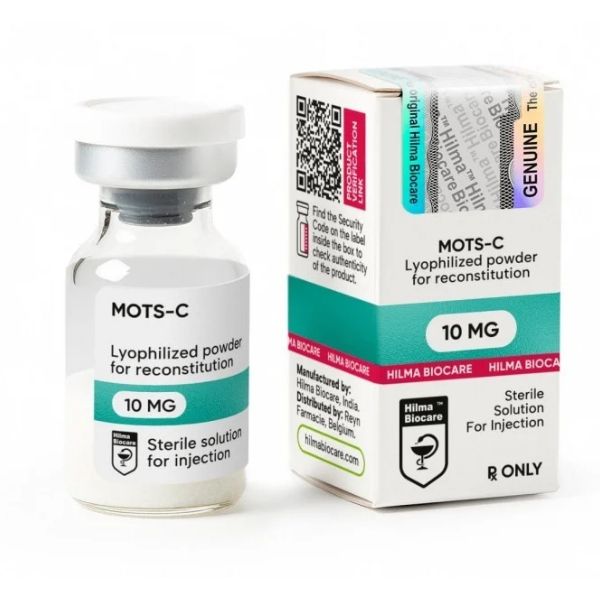
MOTS-C Hilma Biocare 10 mg
MOTS-C is a 16-amino-acid peptide encoded by the mitochondrial genome. It participates in signaling that adapts cellular metabolism to available energy resources and physical exertion.
Product features
| Characteristic | Product information |
|---|---|
| Active ingredient | WORDS-C |
| Family | Mitochondrial signaling peptide |
| Presentation | Freeze-dried powder |
| Bottle contents | 10 mg |
| Packaging | 1 bottle |
Mechanism of action
MOTS-C acts specifically on the AMPK pathway, which is involved in energy regulation. In response to metabolic stress, it crosses into the nucleus and alters the expression of genes linked to cellular adaptation.
Metabolism and adaptation to exertion
Research on cells and animals focuses on several distinct functions:
- Nutrient utilization: regulation of glucose and lipid metabolism, with improved insulin sensitivity observed in mouse models.
- Physical capacity: improvement of endurance and muscular adaptation to stress in mouse experiments.
- Cellular aging: study of oxidative stress, inflammation and the maintenance of muscle, bone and cardiovascular functions.
In humans, an increase in endogenous MOTS-C has been observed during and after exercise. The efficacy of injectable supplementation for cutting, recovery, or athletic performance remains to be established.
Quantities and rate mentioned
The information sheet describes the guidelines below. These are reported usage patterns, without a clinically validated dosage for bodybuilding.
| Setting | Landmark described |
|---|---|
| Quantity indicated | 200 to 1000 µg |
| Frequency described | 1 to 2 administrations per week; up to 3 in some regimens |
| Route mentioned | Subcutaneous, in the adipose tissue of the abdomen or thigh |
| Duration described | 4 to 6 weeks |
| Interview phase mentioned | Up to 10 weeks, with weekly administration |
Associations mentioned
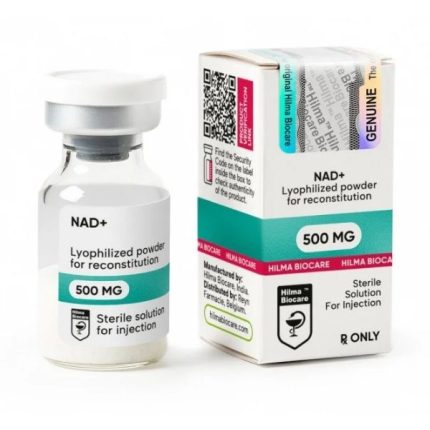
- Metabolism: GLP-1 agonists for appetite regulation, and NAD+ for energy production reactions.
- Tissue and mobility: BPC-157 and TB-500, studied in the context of tissue repair.
- Mitochondrial function: SS-31 for the inner mitochondrial membrane, and glutathione for antioxidant defenses.
Preparation and storage
The preparation described uses bacteriostatic water to reconstitute the powder. After reconstitution, store the bottle in the refrigerator and follow the conditions and duration of use indicated by the manufacturer.
Health and usage information
This page provides educational product information to help you make informed choices. It is not a substitute for medical advice. If you have a health condition or questions about dosage, consult a sports medicine physician or other healthcare professional.
Reviews
There are no reviews yet.