









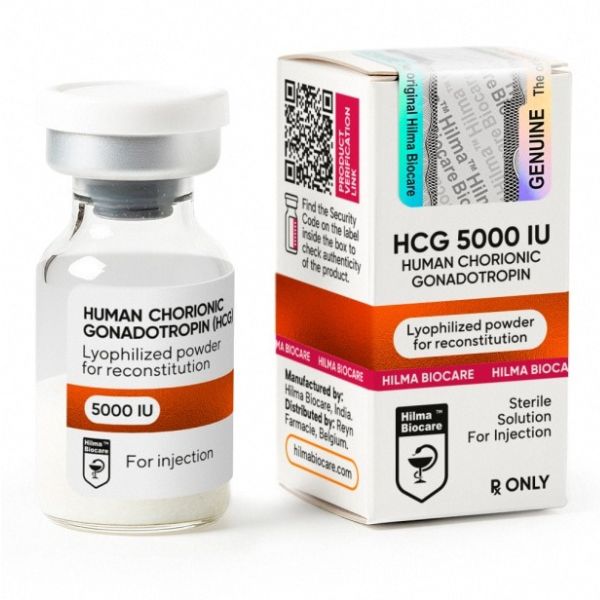
HCG 5000 IU: human chorionic gonadotropin
HCG is a hormone that has an activity similar to that of luteinizing hormone (LH). In men, it stimulates the Leydig cells of the testicles and their production of testosterone.
Product Profile
| Characteristic | Product information |
|---|---|
| Active substance | Human chorionic gonadotropin (hCG) |
| Family | Gonadotropins |
| Presentation | Powder for injectable preparation |
| Bottle contents | 5,000 IU |
| Half-life of hCG | Approximately 33 hours; pharmacokinetic reference range dependent on preparation |
Hormonal action and testicular function
hCG is naturally produced by the placenta during pregnancy, where it helps maintain the corpus luteum. Its LH-like activity also explains its role in the production of sex hormones in the gonads.
In men, direct stimulation of testicular receptors occurs even when the LH signal is reduced. In medicine, this property is used in certain forms of hormonal deficiency and infertility of hormonal origin.
Fertility and context after a cycle
- Male fertility: treatment aims to restore a hormonal environment conducive to reproductive function. The choice of treatment depends on the cause of the disorder and the fertility assessment.
- After steroid use: monitoring distinguishes between the testicular response to hCG and the autonomous recovery of the hormonal axis. An increase in testosterone during treatment is not sufficient to establish this recovery.
- Body composition and recovery: results depend on the initial hormonal deficiency, training, and diet. The specific benefits of hCG on muscle preservation during a cutting phase remain to be established.
Dosages and contexts of use
The ranges below are taken from the product information sheet. They describe distinct uses and do not constitute validated dosages for this bottle nor a program to be followed.
| Context described | Values shown |
|---|---|
| Support for testosterone production | 500 to 1,000 IU per week |
| Context after a cycle | 500 to 2,500 IU per administration, 2 to 3 times per week |
| Fertility care | 500 to 4,000 IU per administration, 2 to 3 times per week |
The dose, duration and methods of stopping are defined with a doctor based on the hormonal assessment and the response to treatment.
Tolerance and monitoring
Increased testosterone production also increases the amount available for conversion to estrogen. Effects to watch for include gynecomastia, mood swings, and water retention, especially at higher doses.
Reported side effects include pain, redness or swelling at the injection site, headache, fatigue, drowsiness, and edema. Prolonged use or high doses require appropriate hormonal monitoring.
A skin rash, itching, or dizziness may indicate an allergic reaction. Facial swelling or difficulty breathing requires urgent medical attention.
Health and usage information
This page provides educational product information to help you make informed choices. It is not a substitute for medical advice. If you have a health condition or questions about dosage, consult a sports medicine physician or other healthcare professional.
Reviews
There are no reviews yet.